
AIMIX Group
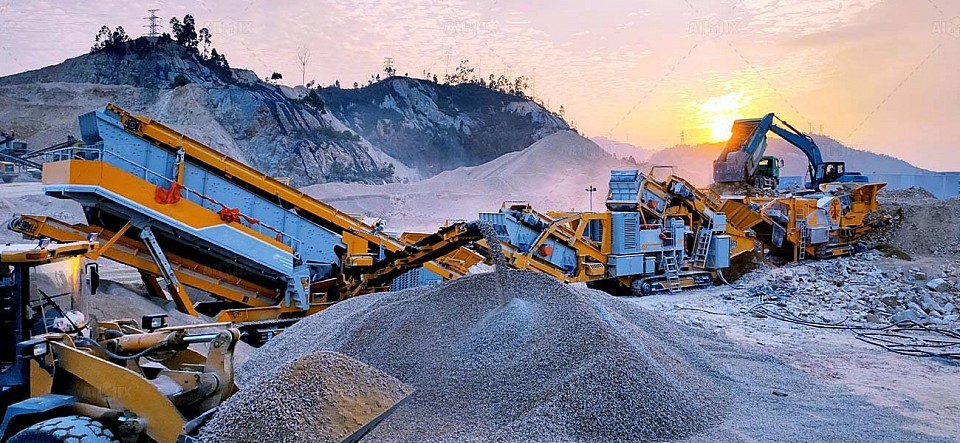
crusher plant
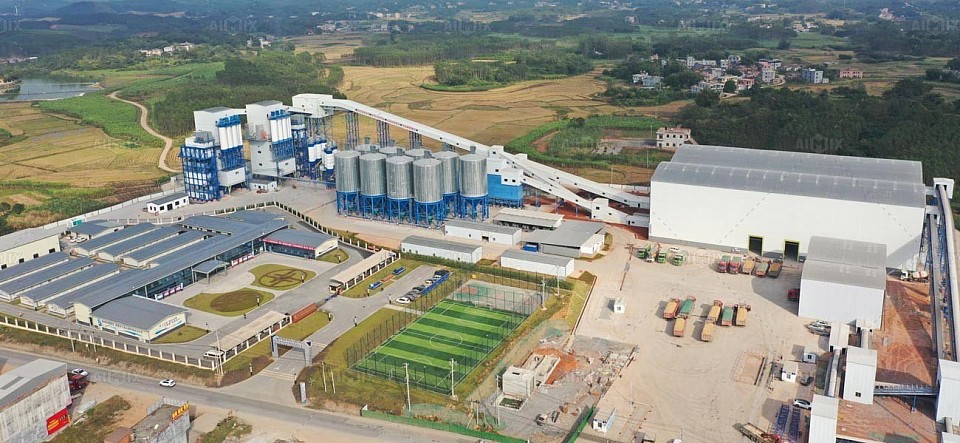
concrete plant
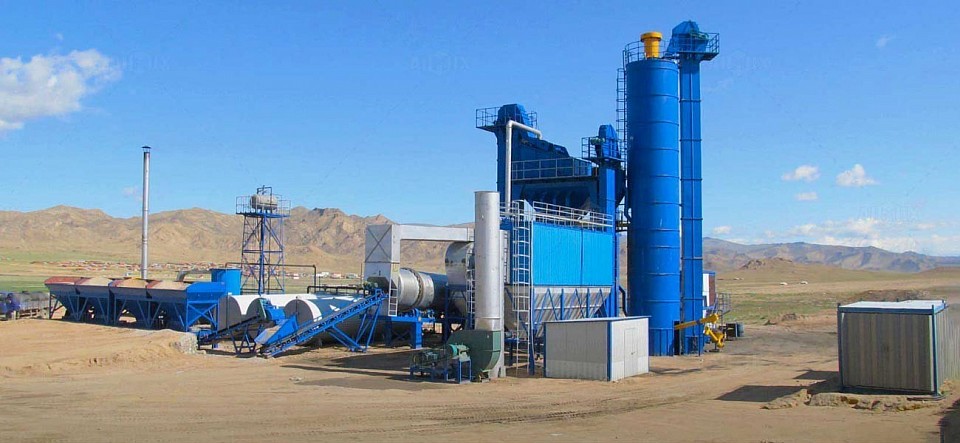
asphalt plant
About AIMIX
AIMIX Group is a customer-center-oriented heavy equipment manufacturer and supplier, devoted to production, innovation, combination, one-stop solution, etc.
AIMIX GROUP is the first choice for overseas and domestic customers to import construction machinery and equipment from China., which is founded in 2010.
AIMIX covers an area of 120,000 square meters, with a construction area of 60,000 square meters. There are more than 1000 staffs, among whom there are 16 engineers, more than 90 professional technicians, 60 administrative staff and 600 skilled workers.
We have been dedicated to providing our customers with cost-effective, safe, easy-to-operate, and easy-to-maintain construction machines such as concrete batching plants, concrete pumps, self-loading concrete mixers, and crushing plants.
We have exported our equipment to more than 100 countries, and the repeat rate of our regular customers has reached 15%, and the referral orders from our regular customers have reached 30%.
Is a 100 tph Asphalt Plant Enough for Producing Both AC14 and AC20 Gradations?
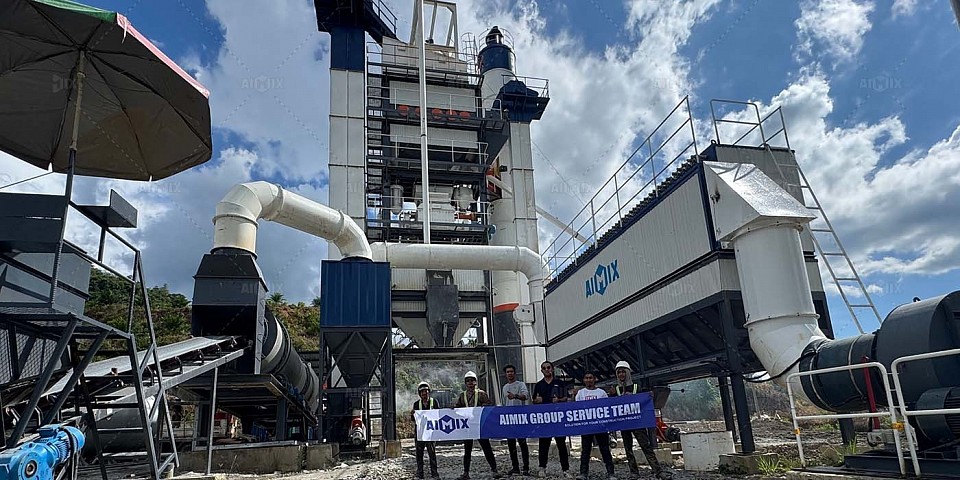
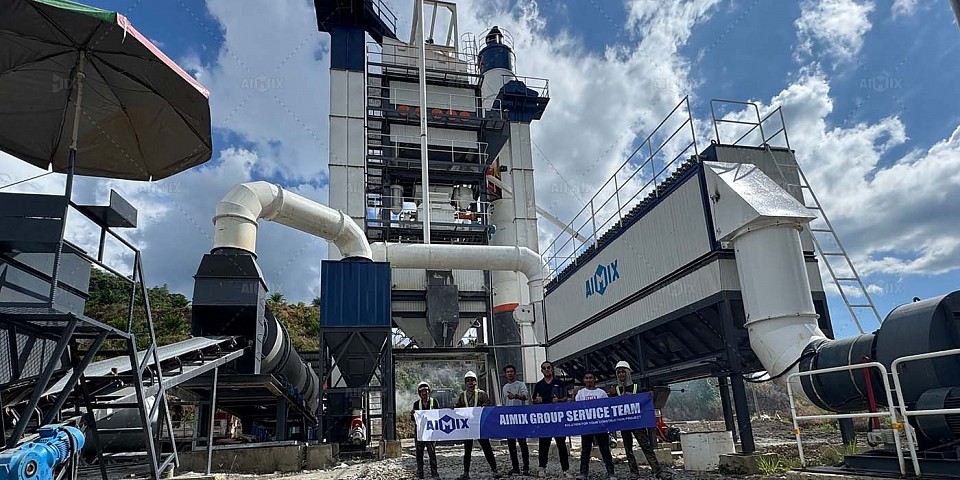
stationary asphalt mixing plant for sale in Malaysia
When contractors ask whether a 100 tph asphalt plant can handle both AC14 and AC20 production, they usually face tight project schedules, strict mix quality requirements, and fluctuating delivery demands. I often meet clients who think the answer depends only on capacity. But in real projects, the right choice depends on daily tonnage needs, switching frequency, binder temperature control, and the stability of the plant mix asphalt during continuous production. In this post, I want to share how I help customers evaluate this question based on real-world job-site challenges, not just theory.
Understanding What 100 tph Actually Means in Daily Production
Before comparing AC14 and AC20 output, we need a clear understanding of what 100 tph means in real operation. Many customers assume “100 tph” equals 100 tons every single hour, all day long. That sounds ideal, but actual production always fluctuates. Fuel moisture, gradation changes, and truck loading rhythm affect output. Therefore, I usually help customers calculate their real 8–10-hour shift capacity instead of relying on nominal values.
On average, a 100 tph plant produces about 700–850 tons per shift. This number matters when you handle multiple gradations. Because every change in recipe costs time, you must ensure the plant still meets the required daily tonnage after each adjustment. This sets the foundation for the next question.
Why AC14 and AC20 Scheduling Matters
Clients who produce both AC14 and AC20 often serve different parts of the same project. AC14 works for surface layers. AC20 works for base layers. Switching between them must be smooth. If the plant stops too often for cleaning or adjustments, daily output drops fast. Therefore, the calculation is not only about hourly capacity but also about how many times you change mix designs.
Comparing Material Requirements for AC14 vs. AC20
Once you understand the real output of a 100 tph plant, the next step is to compare the technical requirements of AC14 and AC20. Although both belong to the AC series, their gradations differ. AC20 uses coarser aggregates. AC14 uses more fine aggregates. This difference affects the drying drum load, mixing time, and final temperature control.
These technical factors also influence how stable your production stays during recipe changes. For example, AC20 requires strong drying performance because of the larger stone fraction. Meanwhile, AC14 requires more accurate fine aggregate proportioning. As a result, a hot mix plant that performs well at 100 tph in AC20 may not reach the same output in AC14 unless the cold aggregate feeding and weighing systems stay very stable.
How Switching Between Mixes Impacts Output
Every customer I meet wants smooth switching. But in real operations, switching between AC14 and AC20 often requires changing cold bins, adjusting the filler rate, and recalibrating binder flow. During this process, effective capacity drops. That is why many contractors ask whether they should upgrade to 120 tph or 160 tph models. The answer depends on your expected switch frequency. If you switch only once per day, 100 tph is enough. If you switch 3–5 times daily, your plant may struggle to keep up.
How Much Daily Tonnage You Actually Need
After discussing mix characteristics, I always return to the fundamental question: How many tons do you need per day? Because the real decision comes from matching plant output with job-site requirements. For example, if a contractor must deliver 1,000–1,200 tons of AC14 and AC20 daily, a 100 tph plant reaches its limit quickly. But if daily demand stays between 600 and 900 tons, a 100 tph plant works with space to spare.
To help customers choose, I break down the math in a simple structure:
Example Daily Calculation
Shift length: 9 hours Real productivity: 80–90% of nominal capacity Nominal capacity: 100 tph
So the real daily output = 100 tph × 9 hours × 0.85 ≈ 765 tons.
If your project needs both AC14 and AC20 on the same day, you must split this total. If AC14 takes 350 tons and AC20 takes 300 tons, the plant can handle this with one switch. But if the project demands higher volumes, your plant must run longer or upgrade capacity. That is why understanding your daily demand helps you decide more accurately.
Evaluating Real-World Factors That Reduce Capacity
Even when the plant theoretically meets your requirements, practical job-site conditions may lower capacity. I always remind customers to consider these overlooked factors because they affect performance every day.
1. Moisture Content
High moisture in your aggregates slows drying. It reduces effective output. Some customers lose 10–20% capacity during the rainy season. If your site faces frequent rainfall, a 120 tph plant may give a safer margin.
2. Truck Dispatch Rhythm
A plant can only run as fast as the trucks carry the asphalt away. If trucks return slowly, the plant stops. This again reduces real output. So capacity calculations must match your logistics, not just the plant’s specs.
3. Mix Design Complexity
Some AC14 and AC20 formulas need higher filler content or complex gradations. These add load to the weighing and mixing systems. So, even with the same plant size, output varies among projects.
So, Is a 100 tph Asphalt Plant Enough?
By combining all these factors, I help customers reach a clear conclusion. A 100 tph asphalt plant is enough if:
Your daily output stays under 800–850 tons.You change mixes only once or twice per day.Your aggregates have low to medium moisture.Your logistics match the plant’s production flow.
However, if your project requires high volumes of both AC14 and AC20 at the same time, or if you switch very often, a 120 tph or 160 tph plant brings more flexibility and less production pressure. This upgrade also helps maintain mix quality because the plant doesn’t need to run at its upper limit all day.
How I Help Indonesian Customers Make the Right Decision
Since I work closely with Indonesian contractors, I know that roadworks in Indonesia often involve mixed layer construction. Many clients must deliver base and surface materials within the same week. Some even change mix several times daily. Therefore, I always evaluate the project location, haul distance, weather, and mix design before recommending a plant size. Because each project is unique, the best choice comes from understanding your real daily challenges.
I provide site layout suggestions, production planning, and logistics support. This ensures the plant runs smoothly from day one. When customers choose a bigger plant, they usually want more long-term stability, not just higher capacity.
Ready to Choose the Right Asphalt Plant for AC14 and AC20?
Now you have a clear, real-world understanding of how a 100 tph asphalt plant performs when producing both AC14 and AC20. If you want to check whether your current project needs a 100 tph, 120 tph, or 160 tph asphalt plant, I can help you evaluate it based on your actual daily tonnage, switching frequency, weather, and mix requirements. A correct decision saves time, reduces mistakes, and stabilizes your asphalt supply.
If you want me to calculate your project’s real daily needs or recommend a suitable asphalt plant model for Indonesia, just contact me. I’m ready to help you plan your plant capacity and support your project from installation to after-sales service. Learn about our asphalt plant price at right!
Is a 120 t/h Asphalt Mixing Plant Suitable for Desert Projects in Saudi Arabia?
Saudi Arabia’s desert environment presents unique challenges for construction projects. From extreme heat to shifting sands, every equipment choice can significantly affect project efficiency. One question frequently asked by project managers is whether a 120 t/h asphalt manufacturing plant is suitable for desert road construction projects. In this article, we will explore the advantages, considerations, and practical recommendations to help you make an informed decision.
Understanding Desert Construction Challenges
Before evaluating the suitability of a 120 t/h asphalt mixing plant, it is crucial to understand the specific challenges of desert construction. The desert climate in Saudi Arabia is characterized by high temperatures, frequent sandstorms, and significant temperature fluctuations between day and night. These conditions can affect both the quality of asphalt and the performance of machinery.
Extreme Heat and Material Handling
High daytime temperatures can lead to rapid cooling of asphalt once it is mixed. Asphalt needs to maintain a certain temperature to ensure proper binding and durability. A 120 t/h asphalt batch plant near me, with its moderate production capacity, can reduce the time asphalt spends in transport. This ensures that hot asphalt reaches the paving site efficiently, minimizing cooling issues and improving road quality.
Sand and Dust Interference
Sandstorms and dust are common in Saudi deserts. Dust particles can contaminate aggregates and affect the quality of asphalt. Therefore, a plant used in desert areas must have effective dust collection systems and sealing measures. A well-maintained 120 t/h plant can be equipped with advanced dust filters and closed conveyors, ensuring that material quality remains consistent despite environmental challenges.
Why a 120 t/h Asphalt Plant Might Be Ideal
Choosing the right plant capacity depends on project scale, logistics, and workforce. Here are reasons why a 120 t/h asphalt mixing plant could be suitable for desert projects.
Balanced Production Capacity
A 120 t/h asphalt plant offers a moderate production rate. It is high enough to support medium-scale road projects without overwhelming transportation or labor resources. At the same time, it avoids excessive idle time or underused equipment. This balance ensures cost efficiency and smooth project progression.
Flexibility and Mobility
Desert projects often involve remote locations and moving construction sites. A 120 t/h hot mix plant for sale is generally more compact than larger models, making relocation easier. Many modern plants are designed for mobility, allowing quick setup and teardown, which is particularly useful when road segments are dispersed across desert regions.
Energy Efficiency
Operating in desert areas requires equipment that consumes energy efficiently. A 120 t/h asphalt plant typically requires less fuel and power than larger capacity plants. This reduces operational costs and minimizes the environmental footprint of construction activities, which is an important consideration in Saudi Arabia’s sustainable infrastructure initiatives.
Considerations for Desert Environment Operations
Despite the advantages, certain factors must be considered to ensure optimal performance of a 120 t/h asphalt plant in the desert.
Water Supply and Cooling
Asphalt production often involves water for dust suppression and cooling. Desert areas can have limited water resources, so planning for water supply is critical. Investing in water-saving systems or recycling mechanisms can help maintain smooth operations without overburdening local resources.
Maintenance and Durability
The desert environment can accelerate wear on equipment. Sand and high temperatures can cause abrasion, clogging, and overheating. Regular maintenance, use of high-quality lubricants, and protective measures for sensitive components will extend the lifespan of a 120 t/h asphalt plant and prevent costly downtime.
Workforce Training
Even the best equipment requires skilled operators to perform efficiently. Training local personnel on desert-specific challenges, such as handling hot asphalt and operating dust control systems, is essential. A well-trained team ensures that the plant operates at its full potential, even in harsh conditions.
Case Study: Medium-Scale Desert Road Projects
Consider a typical 50 km road project in Saudi Arabia’s desert region. Project planners require consistent asphalt quality, timely delivery, and cost-effective operations. A 120 t/h asphalt plant can produce sufficient asphalt to support daily paving targets. Its mobility allows sections of the plant to be relocated closer to different construction sites, reducing transport time and preserving asphalt temperature.
Furthermore, its moderate size simplifies maintenance and reduces fuel consumption compared to larger plants. Dust control measures and heat-resistant components ensure reliable operation even during sandstorms or extreme daytime temperatures. Overall, the plant provides an ideal balance of efficiency, quality, and cost control.
Comparing Alternative Capacities
Some project managers consider larger plants, such as 160 t/h or 240 t/h models. While these plants offer higher production, they also demand more space, fuel, and workforce management. For medium-scale desert projects, oversized plants may lead to inefficiencies and increased costs. Conversely, smaller plants under 100 t/h might struggle to meet paving demands, causing project delays.
Thus, a 120 t/h plant often represents the optimal middle ground. It balances production needs with operational efficiency, particularly in remote desert locations where resources are limited and environmental conditions are challenging.
Tips for Maximizing Plant Efficiency in Desert Conditions
To ensure that a 120 t/h asphalt plant performs optimally in Saudi Arabia’s deserts, consider the following practical tips:
Install dust-proof covers on conveyors and storage bins to prevent sand contamination.Schedule maintenance during cooler hours to reduce heat-related wear and tear.Use insulated transport trucks to maintain asphalt temperature during delivery.Implement water recycling systems to conserve limited resources.Train operators to respond quickly to environmental challenges, such as sudden sandstorms.
By following these strategies, you can enhance plant efficiency, reduce downtime, and maintain consistent asphalt quality throughout the project.
Conclusion: Is a 120 t/h Plant Right for Your Project?
Based on practical experience and desert-specific considerations, a 120 t/h asphalt mixing plant is indeed suitable for medium-scale projects in Saudi Arabia. Its moderate production capacity, mobility, energy efficiency, and adaptability make it ideal for desert road construction. However, success depends on careful planning, proper maintenance, and trained personnel.
For project managers looking to achieve high-quality asphalt paving in challenging desert conditions, investing in a 120 t/h plant can deliver both performance and cost-efficiency. By combining the right equipment with strategic operational practices, you can complete projects on time, within budget, and with superior asphalt quality.
Partner with Experts for Desert Asphalt Projects
At AIMIX Group, we provide reliable 120 t/h asphalt mixing plants designed for desert environments. Our team offers technical support, installation guidance, and maintenance training tailored to Saudi Arabia’s unique conditions. Choose AIMIX to ensure that your desert construction projects run smoothly, efficiently, and successfully.
Contact us today to discuss your project requirements and learn how our 120 t/h asphalt mixing plants can meet your needs.
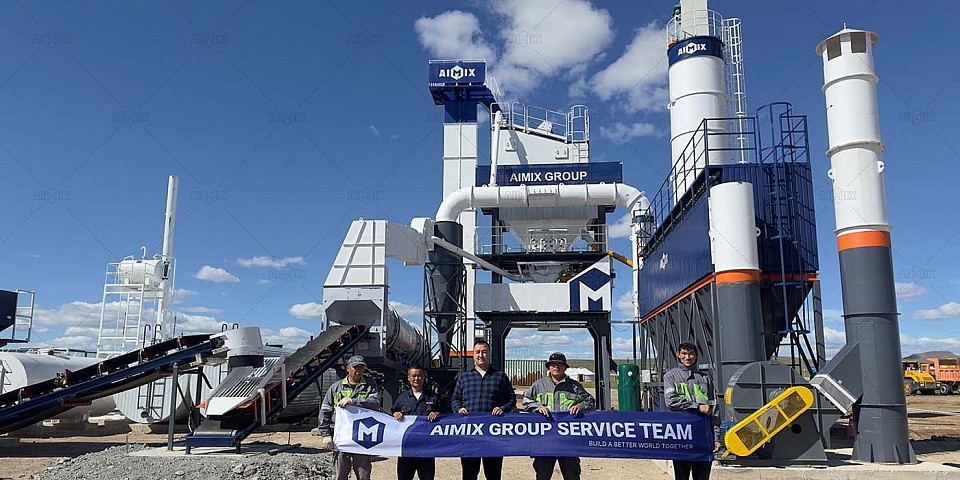
120 asphalt batch plant for sale
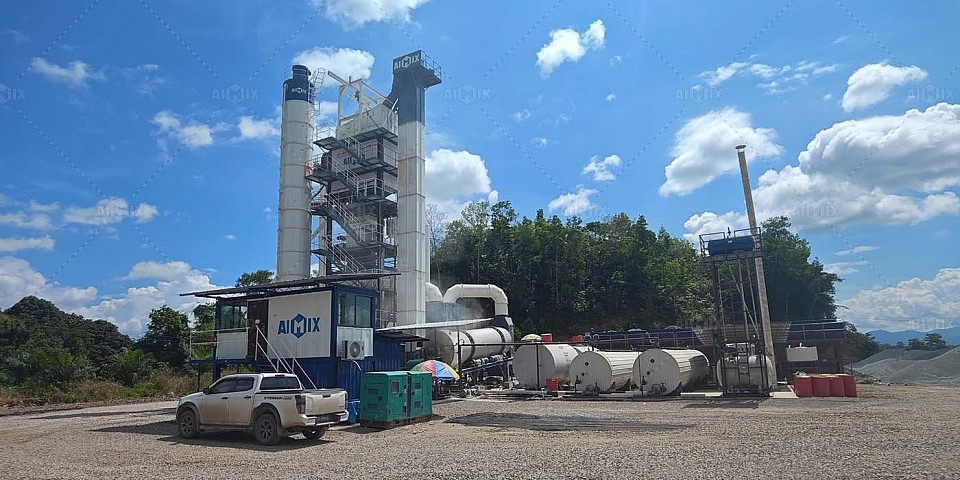
What asphalt plant setup is best for private road contractors in Nigeria?
Nigeria’s private road construction market is growing fast. Industrial parks, real estate estates, mining access roads, logistics hubs, and PPP road projects all need reliable asphalt supply. For private road contractors, the key question is no longer “Do we need an asphalt plant in Nigeria?” but “What asphalt plant setup actually fits our projects, budget, and operating conditions?”
This article answers that question from a contractor’s point of view. We focus on real project needs in Nigeria, not textbook theory. We connect plant types, capacities, and configurations to daily construction challenges. By the end, you will clearly understand which asphalt plant setup makes sense for your business—and why.
Understanding The Reality Of Private Road Projects In Nigeria
Before choosing any equipment, contractors must first look inward. Project reality should guide plant selection, not supplier brochures.
Private road contractors in Nigeria often face mixed project profiles. One month may involve a 5–10 km industrial road. The next may include internal estate roads or rehabilitation work. Therefore, flexibility matters.
At the same time, Nigeria presents specific constraints. Fuel costs fluctuate. Power supply can be unstable. Skilled operators are limited in some regions. Transporting oversized equipment across states may face delays.
Because of these factors, the “best” asphalt plant setup is not the biggest or the most advanced. Instead, it is the setup that balances output, stability, cost, and ease of operation.
With this context in mind, let’s examine the main decision factors step by step.
Choosing The Right Asphalt Plant Type: Batch Or Drum?
The first major decision is plant type. This choice affects asphalt quality, operating flexibility, and long-term business growth.
In simple terms, asphalt plants fall into two categories: batch type and drum mix type.
Why Batch Asphalt Plants Suit Most Private Contractors
For many private road contractors in Nigeria, batch asphalt plants offer clear advantages.
First, batch plants provide better mix control. Contractors can adjust aggregate proportions, bitumen content, and filler ratios for different projects. This flexibility helps meet varying client specifications.
Second, batch plants produce more consistent quality. Each batch is weighed and mixed separately. As a result, quality control becomes easier, especially for projects inspected by consultants or government partners.
Third, batch plants support future upgrades. If your business grows, you can add hot mix storage silos, RAP systems, or dust control upgrades.
Because of these strengths, batch asphalt plants are often the preferred choice for contractors who want stable growth rather than short-term savings.
When Drum Mix Plants May Still Make Sense
That said, drum mix plants are not wrong in every case.
If your projects focus on long stretches of road with the same mix design, drum plants offer simplicity. They usually cost less upfront. They also consume less power in some configurations.
However, drum plants provide limited flexibility. Mix changes require more adjustment time. Quality control can also be harder for variable projects.
Therefore, for private contractors who handle diverse jobs, batch plants usually provide better long-term value.
Now that plant type is clearer, the next step is capacity selection.
How To Select The Right Production Capacity
Capacity defines how much asphalt you can produce per hour. Choosing the right size directly affects profitability.
Too small, and projects drag on. Too large, and fixed costs rise quickly.
Typical Capacity Ranges For Nigerian Private Contractors
Most private road contractors in Nigeria operate within these ranges:
• 60–80 TPH: Suitable for small industrial roads, estate roads, and maintenance work.
• 100–120 TPH: Ideal for medium private roads and continuous contracts.
• 160 TPH And Above: Better for large-scale PPP or long-term concession projects.
In practice, many contractors find 100–120 TPH to be the sweet spot. This range balances output with investment cost.
Matching Capacity With Paving Speed
Capacity should also match your paving equipment.
If your asphalt paver machine lays 300–400 tons per day, a 100 TPH plant is sufficient. If paving speed increases, the plant must keep up.
Therefore, capacity decisions should consider the entire paving system, not just the asphalt plant alone.
Once capacity is defined, plant mobility becomes the next logical factor.
Fixed Or Mobile Asphalt Plant: Which Is Better?
Plant installation style affects logistics, relocation cost, and operational flexibility.
Why Fixed Plants Suit Long-Term Private Projects
Fixed asphalt plants work best when projects stay in one region for years.
They offer higher stability. They allow larger storage silos. They also support higher output with less wear.
For contractors serving industrial zones or urban developments around Lagos, Abuja, or Port Harcourt, fixed plants often make sense.
When Mobile Or Modular Plants Add Value
However, not all private projects are centralized.
For contractors working across multiple states, modular asphalt plants reduce relocation time. They break into transportable units. Installation becomes faster.
This flexibility can lower downtime between projects. As a result, cash flow improves.
Thus, the best setup depends on project geography. Stability favors fixed plants. Mobility favors modular designs.
Key Configuration Elements That Impact Daily Operation
Beyond plant type and size, configuration details determine how smoothly operations run.
Bitumen Storage And Heating System
Reliable bitumen heating is critical in Nigeria’s climate.
Thermal oil heating systems provide stable temperature control. They reduce bitumen aging. They also improve safety.
Electric heating may suit smaller tanks. However, fuel-fired systems often perform better in areas with unstable power supply.
Aggregate Feeding And Drying System
High moisture aggregates are common during rainy seasons.
Therefore, dryers should have sufficient capacity. Burner quality also matters. Efficient burners reduce fuel consumption.
Good cold aggregate bin design ensures smooth feeding. This reduces segregation and improves mix quality.
Dust Control And Environmental Compliance
Environmental awareness is rising across Nigeria.
Baghouse filters help control dust emissions. They also recover filler for reuse.
Clean operations improve community relations. They also protect long-term business licenses.
Operating Cost Considerations For Nigerian Contractors
An asphalt plant is not just a purchase. It is a long-term operating asset.
Fuel Consumption And Efficiency
Fuel is a major cost driver.
Efficient burners and insulated drums reduce consumption. Over time, these savings become significant.
Maintenance And Spare Parts Availability
Simple design improves uptime.
Locally available spare parts reduce downtime. Clear maintenance schedules protect investment value.
Choosing a supplier with regional support matters as much as choosing the machine itself.
Why Supplier Experience Matters As Much As Equipment
Even the best plant fails without proper support.
Experienced suppliers understand Nigerian site conditions. They adjust configurations accordingly.
They provide installation guidance. They train operators. They offer long-term service support.
As a result, contractors reduce operational risk and protect project timelines.
Recommended Asphalt Plant Setup For Most Private Road Contractors
Based on real project conditions, the following setup suits many Nigerian private contractors:
• Batch Type Asphalt Plant
• Capacity: 100–120 TPH
• Modular Or Semi-Fixed Design
• Thermal Oil Bitumen Heating
• Baghouse Dust Collection System
• Optional Hot Mix Storage Silo
This configuration balances quality, flexibility, cost, and scalability.
Conclusion: Building Roads And Building A Business
Choosing the right asphalt plant setup is not only about machines. It is about business strategy.
The best setup supports current projects while allowing future growth. It controls costs while maintaining quality. It fits Nigeria’s operating environment rather than fighting it.
Private road contractors who think long-term make smarter equipment decisions. They win more projects. They deliver better roads.
Why More Contractors Choose MACROAD
At MACROAD, we work closely with private road contractors across Africa.
We do not sell one-size-fits-all solutions. Instead, we design asphalt plant setups based on project scale, location, and budget.
From batch asphalt plants to modular configurations, our systems focus on reliability, efficiency, and long-term value.
If you are planning your next asphalt plant investment in Nigeria, MACROAD is ready to help you build roads—and a stronger business—step by step.
How Can Contractors Save 15-20% in Fuel Costs Using a 120 TPH Asphalt Plant for a Government Project in South Africa?
Fuel costs are one of the largest ongoing expenses in road construction projects, especially in regions like South Africa, where transportation distances are often long, and energy prices can fluctuate significantly. Contractors looking to reduce operational costs without compromising on quality or project timelines can benefit significantly from using energy-efficient asphalt plants. In this article, we will explore how using a 120 TPH energy-efficient asphalt plant equipment can help contractors save 15-20% in fuel costs for government infrastructure projects in South Africa.
The Growing Need for Cost-Effective Solutions in the Construction Industry
As infrastructure projects increase in scale and complexity, contractors are under constant pressure to optimize their operations. This is especially true in government projects where budgets are tight, and meeting deadlines is crucial. The construction sector in South Africa faces unique challenges, including volatile fuel prices and long transportation distances between the plant and job sites. For contractors, finding a way to mitigate these challenges while maintaining high standards is essential for staying competitive and profitable.
One of the most effective ways to achieve cost savings is by reducing fuel consumption during the asphalt production process. By investing in a 120 TPH energy-efficient asphalt plant, contractors can significantly lower fuel expenses, thereby improving their bottom line. But how exactly does an energy-efficient plant contribute to these savings? Let’s break it down.
Understanding the Benefits of a 120 TPH Energy-Efficient Asphalt Plant
-
Before diving into the specifics of fuel savings, it's essential to understand what makes a 120 TPH hot mix plant for sale energy-efficient. These plants are equipped with advanced technology designed to optimize fuel use and minimize waste. Here are the key features:
Improved Burner Technology: Energy-efficient asphalt plants use advanced burner systems that provide a higher combustion efficiency. This results in better fuel utilization, meaning less fuel is consumed to produce the same amount of asphalt.
- Heat Recovery Systems: Many energy-efficient plants are equipped with heat recovery systems that capture and reuse excess heat. This reduces the need for additional fuel to maintain the required temperature for asphalt production.
- Efficient Mixing Process: The mixing technology in energy-efficient plants is designed to minimize energy loss during the production process. This ensures that the plant operates at optimal efficiency, reducing fuel consumption.
- Intelligent Control Systems: Modern asphalt plants are equipped with intelligent control systems that monitor and adjust fuel usage based on real-time demand, further optimizing fuel efficiency.
With these technological advancements, a 120 TPH energy-efficient asphalt plant is not only capable of producing high-quality asphalt but also ensuring that fuel usage is minimized, contributing to long-term cost savings.
How Can Contractors Save 15-20% in Fuel Costs?
Now that we have a clearer picture of what makes an asphalt plant energy-efficient, let's take a closer look at how these features contribute to fuel savings. Contractors can save 15-20% in fuel costs through the following mechanisms:
1. Reduced Fuel Consumption During Asphalt Production
The most direct way energy-efficient plants reduce fuel costs is by consuming less fuel during the production process. Thanks to advanced burner technology and intelligent control systems, these asphalt plants in South Africa can produce asphalt more efficiently. As a result, contractors need less fuel to produce the same amount of asphalt, leading to a reduction in overall fuel consumption.
2. Optimized Heat Utilization
In traditional asphalt plants, a significant amount of heat is wasted during the production process. However, energy-efficient plants are equipped with heat recovery systems that capture this wasted heat and reuse it in the process. This reduces the need for additional fuel to maintain the required temperature for asphalt production, cutting fuel expenses by up to 20%.
3. Less Fuel for Transportation
Another key area where energy-efficient asphalt plants contribute to savings is in transportation. These plants are designed to be more mobile, allowing contractors to place them closer to the job site. By reducing transportation distances, contractors can save on fuel costs associated with moving raw materials and finished products between the plant and the site.
4. Reduced Maintenance Costs
Energy-efficient plants are built to be more reliable and durable, which means fewer breakdowns and less maintenance. This not only reduces downtime but also lowers the costs associated with repairs and maintenance, which indirectly contributes to fuel savings by keeping the plant running smoothly and efficiently.
Real-World Examples: How Energy-Efficient Asphalt Plants Have Benefited Contractors
Let’s look at some real-world examples to see how energy-efficient asphalt plants have helped contractors in South Africa and other regions. Contractors who have adopted 120 TPH energy-efficient asphalt plants have reported significant fuel savings, particularly on long-term government projects. By optimizing fuel use and reducing transportation costs, these contractors have been able to stay within budget and even offer more competitive pricing on future bids.
Case Study: A Government Road Construction Project in South Africa
One contractor working on a large-scale road construction project for the South African government saw a 17% reduction in fuel costs after switching to a 120 TPH energy-efficient asphalt plant. With the government’s focus on reducing infrastructure costs, this contractor was able to use the fuel savings to invest in additional equipment, improving the overall efficiency of the project.
This case demonstrates that energy-efficient asphalt plants offer not only immediate cost savings but also long-term operational benefits. Contractors who can leverage these savings are better positioned to win government projects and secure repeat business in a competitive market.
Why Choosing a 120 TPH Energy-Efficient Asphalt Plant Is a Smart Investment
For contractors in South Africa, where fuel costs can make up a significant portion of a project’s budget, choosing a 120 TPH energy-efficient asphalt plant is a smart investment. The benefits are clear: reduced fuel consumption, optimized heat utilization, and lower transportation costs. These savings can add up quickly, especially on large government projects where every penny counts.
Moreover, with the added environmental benefits of reduced emissions and energy consumption, contractors can align their operations with global sustainability standards, which is increasingly important to both government clients and the general public.
Conclusion: Take the First Step Toward Fuel Savings Today
Contractors in South Africa looking to optimize their fuel usage and reduce costs should seriously consider investing in a 120 TPH energy-efficient asphalt plant. By saving 15-20% on fuel costs, you not only improve your profitability but also enhance your competitive edge in the marketplace. With the added benefits of improved efficiency and reduced environmental impact, this investment will pay dividends for years to come.
Ready to make the switch? Reach out to us today to learn more about how a 120 TPH energy-efficient asphalt plant can benefit your next government project.
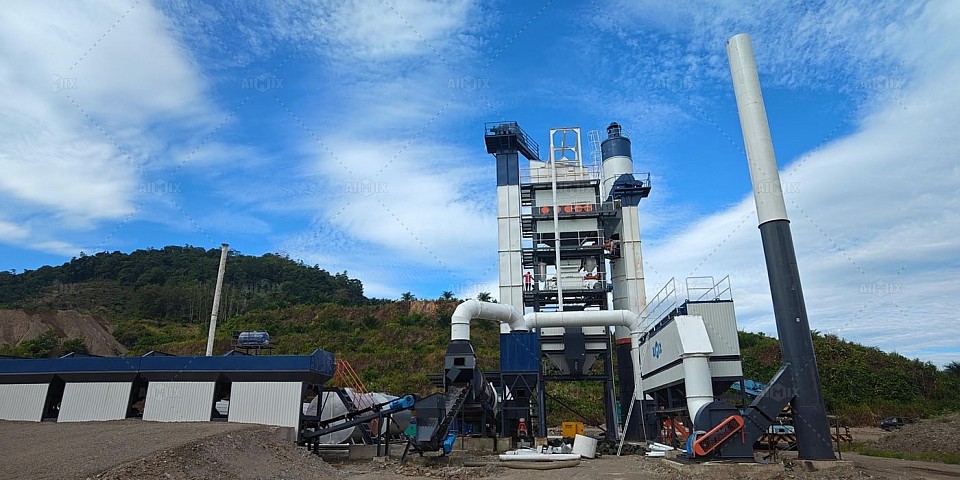
Is A Stationary 120 TPH Asphalt Plant Suitable For Long-Term Highway Projects In Saudi Arabia?
Highway construction in Saudi Arabia is moving fast. Large-scale infrastructure plans, long-distance road networks, and strict quality standards are shaping how contractors choose equipment. Among these decisions, selecting the right asphalt mixing plant plays a key role in project success.
Many contractors ask a practical question: Is a stationary 120 TPH plant mix asphalt strong enough, stable enough, and cost-efficient enough for long-term highway projects in Saudi Arabia? The short answer is yes—but only if it matches your project scale, climate conditions, and operational strategy.
In this article, we break down the real factors that matter. We look at production capacity, environmental challenges, cost control, and long-term performance. More importantly, we analyze this question from your perspective as a contractor or project investor.
Understanding The Demands Of Long-Term Highway Projects In Saudi Arabia
Before choosing equipment, you need to understand what highway projects in Saudi Arabia really require. These projects are not short-term jobs. They often last 1 to 3 years or even longer. They also involve large daily asphalt output and strict paving schedules.
In addition, the working environment creates extra pressure on equipment performance.
High Production Requirements
Most highway projects require continuous asphalt supply. Daily demand can easily reach 800–1500 tons. A 120 TPH asphalt plant can produce around 960 tons in an 8-hour shift. If you run two shifts, output doubles.
Therefore, from a capacity perspective, a 120 TPH plant fits medium to large highway projects well.
Harsh Climate Conditions
Saudi Arabia presents extreme weather conditions. Temperatures often exceed 45°C. Sand and dust are common. These factors directly affect plant performance.
As a result, your asphalt plant must handle high heat, prevent dust intrusion, and maintain stable operation over long periods.
Long Transport Distances
Highway projects stretch across large areas. Asphalt must travel from plant to paving site. If the plant location is not optimized, transport costs increase.
This is why many contractors prefer stationary plants placed strategically near central project zones.
Now that we understand the project demands, let’s look at how a stationary 120 TPH asphalt plant performs under these conditions.
Key Advantages Of A Stationary 120 TPH Asphalt Plant
A stationary asphalt plant offers several advantages for long-term projects. Unlike mobile plants, it focuses on stability, durability, and consistent output.
Let’s explore why this matters for your project.
Stable And Continuous Production
First of all, stationary plants are designed for continuous operation. They use robust structural components and high-quality burners.
This ensures stable asphalt quality. It also reduces unexpected downtime.
For highway projects, consistency is critical. Even small variations in asphalt quality can lead to road defects later.
Better Control Of Asphalt Quality
Secondly, road construction plants offer more precise control systems. You can manage aggregate ratios, bitumen content, and temperature accurately.
This becomes important when working under strict Saudi highway standards.
In other words, better control leads to better road durability.
Lower Long-Term Operating Costs
At first glance, a stationary plant costs more than a mobile plant. However, over a long project cycle, the cost advantage becomes clear.
Fuel efficiency improves. Maintenance intervals become predictable. Spare parts last longer.
Therefore, for projects lasting over 12 months, stationary plants often provide better ROI.
However, advantages alone do not tell the full story. You also need to check whether 120 TPH is the right capacity for your specific project.
Is 120 TPH Capacity Enough For Your Highway Project?
This is the most important question. Capacity must match your daily paving plan. Otherwise, delays and cost overruns will follow.
Let’s break it down with practical scenarios.
Suitable Project Scenarios
A 120 TPH asphalt plant works well in the following cases:
- Medium-scale highway projects (10–50 km sections)
- Projects with daily paving targets of 800–1200 tons
- Multi-section construction where work spreads across zones
In these cases, the plant provides enough output without overspending on oversized equipment.
When You May Need Higher Capacity
However, not all projects fit this capacity.
If your project involves large expressways, or if daily paving exceeds 1500 tons, a 160 TPH or 200 TPH plant may be more suitable.
Otherwise, your team may struggle to meet deadlines.
Therefore, always align plant capacity with your actual project schedule.
Next, let’s look at another critical factor—adaptation to Saudi Arabia’s environment.
How A Stationary Asphalt Plant Performs In Saudi Conditions
Saudi Arabia’s environment creates real challenges. Your plant must operate reliably under heat, dust, and heavy workloads.
Fortunately, modern stationary asphalt plants can adapt well if configured correctly.
High-Temperature Resistance
Advanced burners and insulation systems help maintain stable production even in extreme heat.
This prevents overheating and ensures consistent asphalt mixing.
Dust Control Systems
Baghouse filters and dust collectors play a key role. They reduce emissions and protect internal components.
This is especially important in desert environments.
Durable Structural Design
Heavy-duty steel structures resist thermal expansion and long-term wear.
This ensures that the plant remains stable over years of operation.
As you can see, environmental adaptability is not optional—it is essential.
Now, let’s move to the financial side of the decision.
Cost And Return On Investment Analysis
Every contractor cares about cost. However, smart decisions focus on long-term value rather than initial price.
So, how does a 120 TPH stationary asphalt mixing plant perform financially?
Initial Investment
The upfront cost includes plant purchase, installation, and foundation work.
Stationary plants require more setup time compared to mobile units.
However, this investment supports long-term stability.
Operating Costs
Fuel consumption, labor, and maintenance define your daily expenses.
A well-designed 120 TPH plant can optimize fuel usage and reduce waste.
This directly improves profit margins.
Payback Period
For long-term highway projects, the payback period can range from 8 to 14 months.
After that, the plant starts generating strong returns.
Therefore, for projects longer than one year, this investment makes solid business sense.
Finally, let’s connect all these points into a clear conclusion.
Final Verdict: Is A Stationary 120 TPH Asphalt Plant The Right Choice?
In summary, a stationary 120 TPH asphalt plant is a practical and reliable solution for many long-term highway projects in Saudi Arabia.
It offers stable production, strong environmental adaptability, and cost efficiency over time.
However, the key lies in proper planning. You must match plant capacity with project scale. You must also ensure the plant is configured for high-temperature and dusty conditions.
When these factors align, the plant becomes a powerful asset rather than a limitation.
Take The Next Step For Your Highway Project
If you are planning a highway project in Saudi Arabia, now is the time to evaluate your asphalt production strategy.
Choosing the right plant can save costs, improve efficiency, and ensure long-term success.
Our team can help you analyze your project requirements, recommend the right configuration, and provide a customized solution that fits your budget and timeline.
Contact us today to get a tailored asphalt plant solution designed specifically for your project in Saudi Arabia.